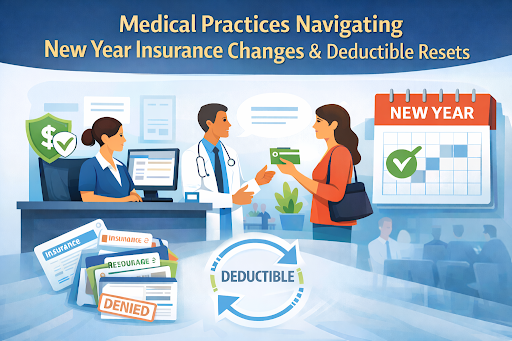
Educate Patients on Deductible Resets and Financial Responsibility
With deductibles resetting at the start of the year, patients are often surprised by higher out-of-pocket costs, even if they had minimal expenses at the end of the previous year. In addition, the increasing shift towards high-deductible plans means more burden on patients and your staff that have to collect their portion.
To manage expectations:
• Communicate deductible resets clearly via appointment reminders, emails, or patient portals
• Train staff to explain estimated patient responsibility confidently and empathetically
• Establish processes where you proactively identify shifts to high-deductible plans and communicate to patients, especially around more costly services, in advance
• Offer written estimates so patients clearly understand their out-of-pocket responsibilities
The bottom line is that transparent financial communication improves collections and builds patient trust.
Strengthen Front Desk Training and Support
Front desk teams shoulder the heaviest burden during the first months of the year. They’re navigating insurance changes, fielding patient questions, managing longer check-in times, and handling frustrated patients – all while trying to keep schedules on track.
Practices should:
• Provide refresher training on insurance basics and plan variations when needed
• Equip staff with clear escalation pathways for complex coverage issues
• Encourage consistent scripting to ensure accurate information is conveyed to the patients while reducing the chance of escalation
• Consider temporarily allocating additional staff to financial counseling if available
We all know that finding (and keeping) good front desk staff is a challenge in and of itself, but investing in them operationally and with additional support will reduce burnout while improving the overall patient experience.
Anticipate and Manage Patient Flow Disruptions
We’ve all been there at the start of the year where every patient has to be checked for new plan information – the lines can lead all the way to the door. Just documenting insurance changes can quickly slow patient flow, leading to longer wait times, and staff frustration.
When possible, consider implementing the following steps to ease the pressure on the front desk and maintain patient satisfaction:
• Build buffer time into schedules during early January if and when possible
• Highly encourage patient use of pre-registration and digital intake forms
• Resolve insurance questions before patients arrive, not when they are at the front desk
The key to patient satisfaction is to get them to your providers as quickly as you can, and ensuring your check in process on January 1 is as efficient as can be will make this possible.
Monitor Denials Closely and Act Quickly
The beginning of the year often sees a spike in claim denials, mostly related to eligibility errors and incorrect plan information. Many of these denials are largely avoidable by enacting comprehensive and timely policies to ensure accuracy of patient demographic and insurance data. However, even the best practices at your front desk can’t always mitigate payer behaviors and changes in policies.
Some of the steps you can take to get ahead of this challenge are:
• Closely track denial trends in real time
• Identify payer-specific issues early on
• Correct workflows quickly before denials stack up
A proactive denial management strategy, especially with your more problematic payers, will make the difference between steady cash flow and months of delayed revenue.
Leverage Revenue Cycle Expertise and Technology
Navigating early-year insurance challenges is always burdensome and unnecessarily complex. Outsourcing to or partnering with a trusted revenue cycle management team can significantly reduce administrative strain and ensure minimal disruption in early year cash flows.
At Fedora Solutions, we manage the most problematic elements of this ‘first of the New Year’ challenge by:
• Verifying eligibility accurately and efficiently
• Addressing coordination of benefits issues effectively
• Managing prior authorizations and payer requirements
• Ensuring your staff know exactly what they need from the patient at check in
Our work allows staff to focus on the patient experience rather than paperwork, benefitting your practice, staff and patients.
Turning Annual Challenges into Strategic Advantages
While the first months of the year are always challenging, they also present an opportunity to strengthen workflows and reinforce financial stability. Practices that plan ahead and leverage the right expertise are far better positioned for long-term success.
Fedora Solutions is proud to support medical practices through every phase of the revenue cycle – especially during this most demanding time of the year.
If you’d like help preparing your practice for insurance changes, deductible resets, and to help mitigate operational strain, we’re here to help. Consider scheduling a meeting with us to learn more at info@ifedora.com.